Reacting to the Craziest Instruments of 2024 - The Guthman New Musical Instrument Competition
Explore ten 2024 Guthman finalists, from a sound-making table and a circle guitar to tactile vocal tools and motion-driven instruments.
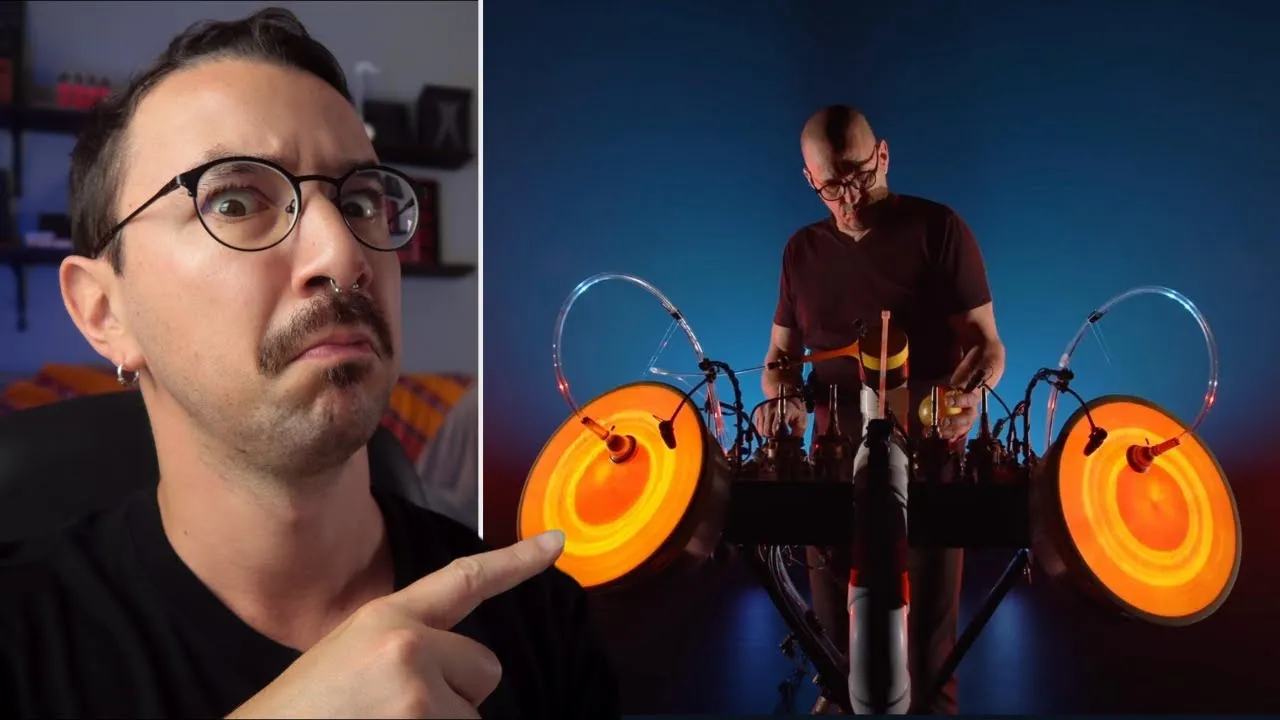
The 2024 Guthman Musical Instrument Competition brought together ten finalists exploring different ways to make and control sound. Their designs range from mechanical instruments to interfaces built around movement, touch, drawing, and voice. This overview checks the instrument descriptions against the competition’s official finalist page. It is not a hands-on evaluation of the instruments.
Instruments that reshape familiar playing gestures
The Babel Table, created by Jean-François Laporte, uses latex membranes and compressed air to produce a range of voices, from percussive sounds to electronic-like chirps. Its design began as part of a children’s project called Babaloune.
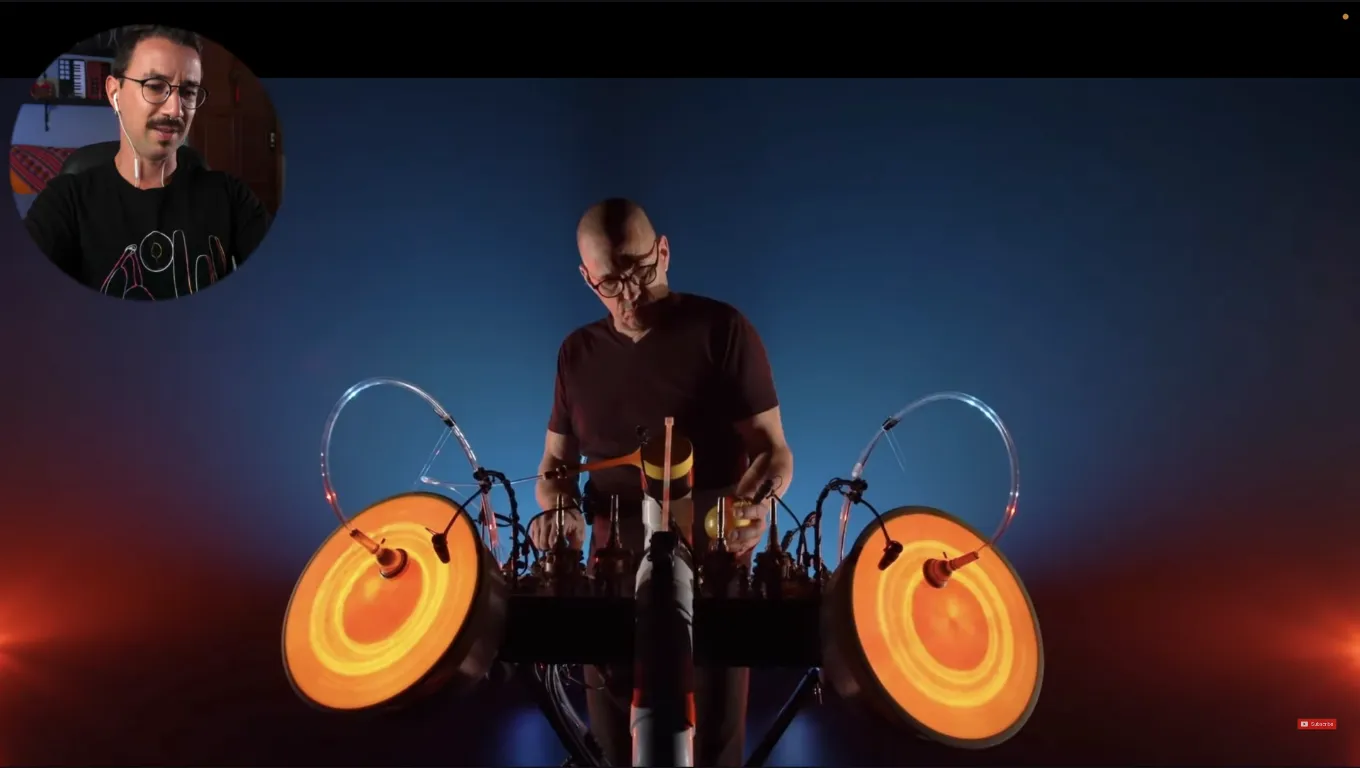
The Babel Table, one of the 2024 finalists.
The Circle Guitar by Anthony Dickens uses a rotating wheel to strike the strings. That changes the picking gesture: a wheel can repeat patterns that are difficult to perform by hand. The Lorentz Violin, created by Thomas Coor, is an electromechanical instrument that uses a variable-speed magnetic wheel and a guitar pickup to produce different tones.
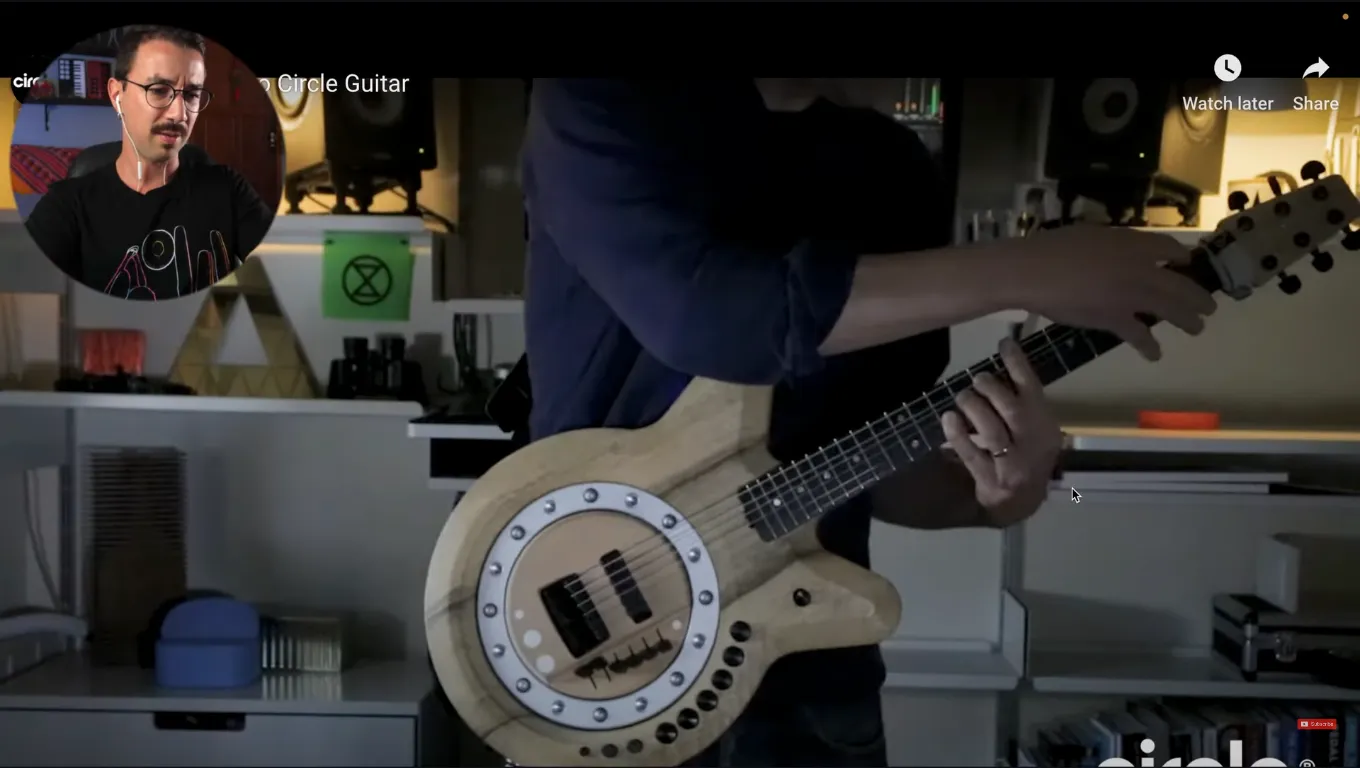
The Circle Guitar, one of the 2024 finalists.
The X.E.K.I., by Orpheas Kofinakos, Herui Chen, and Peter Zhang, encourages performers to incorporate body movement into digitally produced music. The official finalist description focuses on that movement-based approach; the exact playing details are specific to the instrument and are not generalized here.
Instruments that connect sound to the body
BodyMouth, by Kat Mustatea and Yonatan Rozin, links sequences of body movements with sounding out words. The competition describes it as a sound-movement instrument, bringing movement and language together in performance.
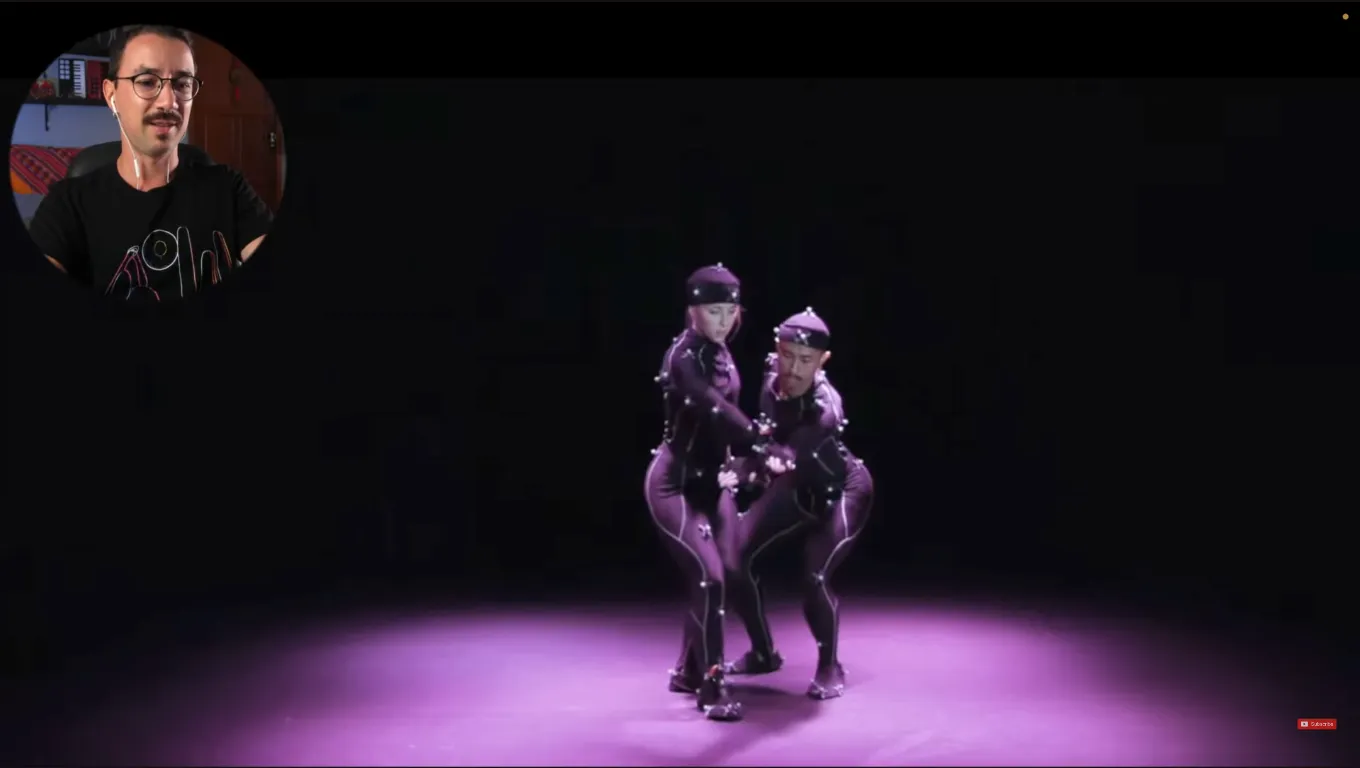
BodyMouth performers demonstrate the instrument.
The Bone Conductive Instrument (BCI) by Pippa Kelmenson sends sound signals through the jaw, using the body’s vibrations. The competition describes it as designed to help people across the hearing spectrum access musical sounds. VocalCords, created by Max Addae, uses three rubber cords that singers can manipulate by hand to augment and modify their voices in real time.
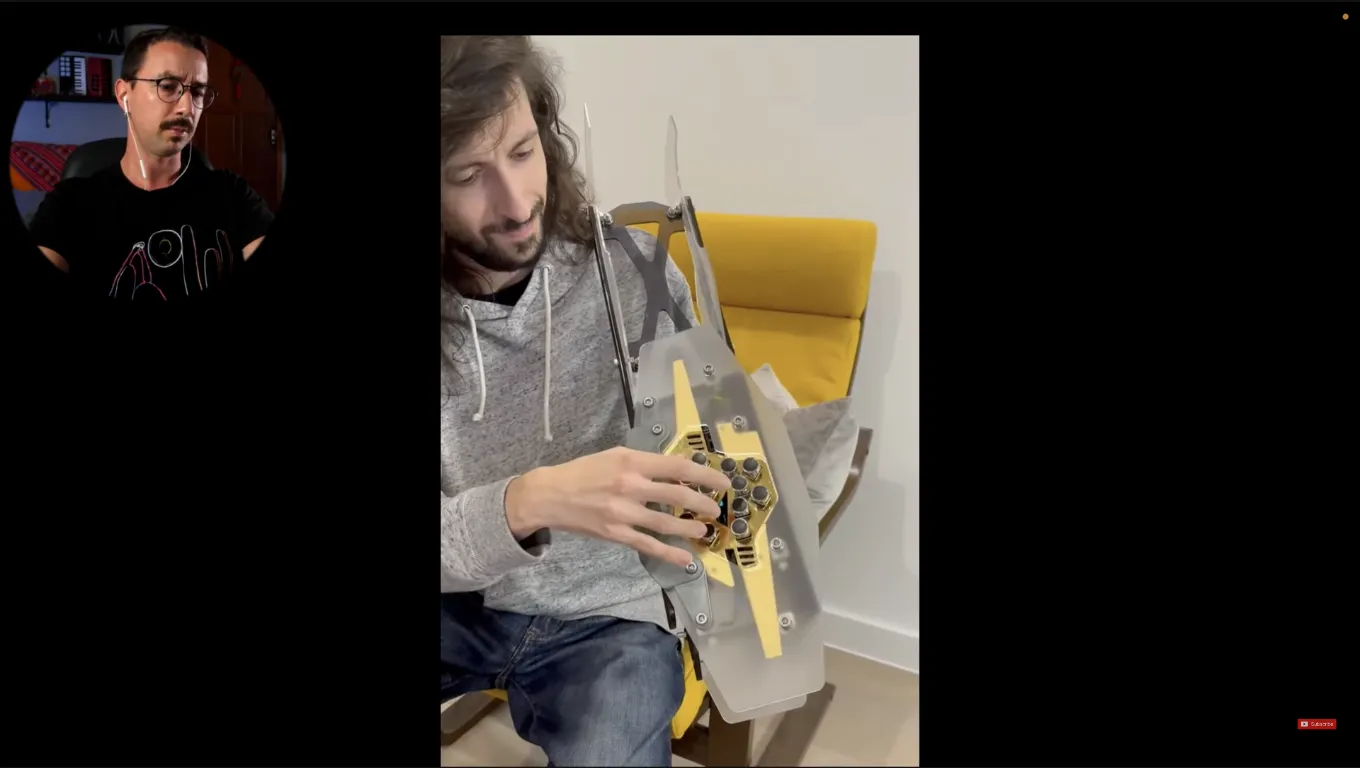
VocalCords turns hand movement on three rubber cords into voice control.
Instruments that turn other input into sound
The Sonògraf by Playmodes is an audiovisual instrument designed for music learning. A camera captures drawings and collages, which are transformed into sound. Thales, by Nicola Privato, uses controllers containing magnets and multiple sensors so performers can make music by interacting with magnetic fields.
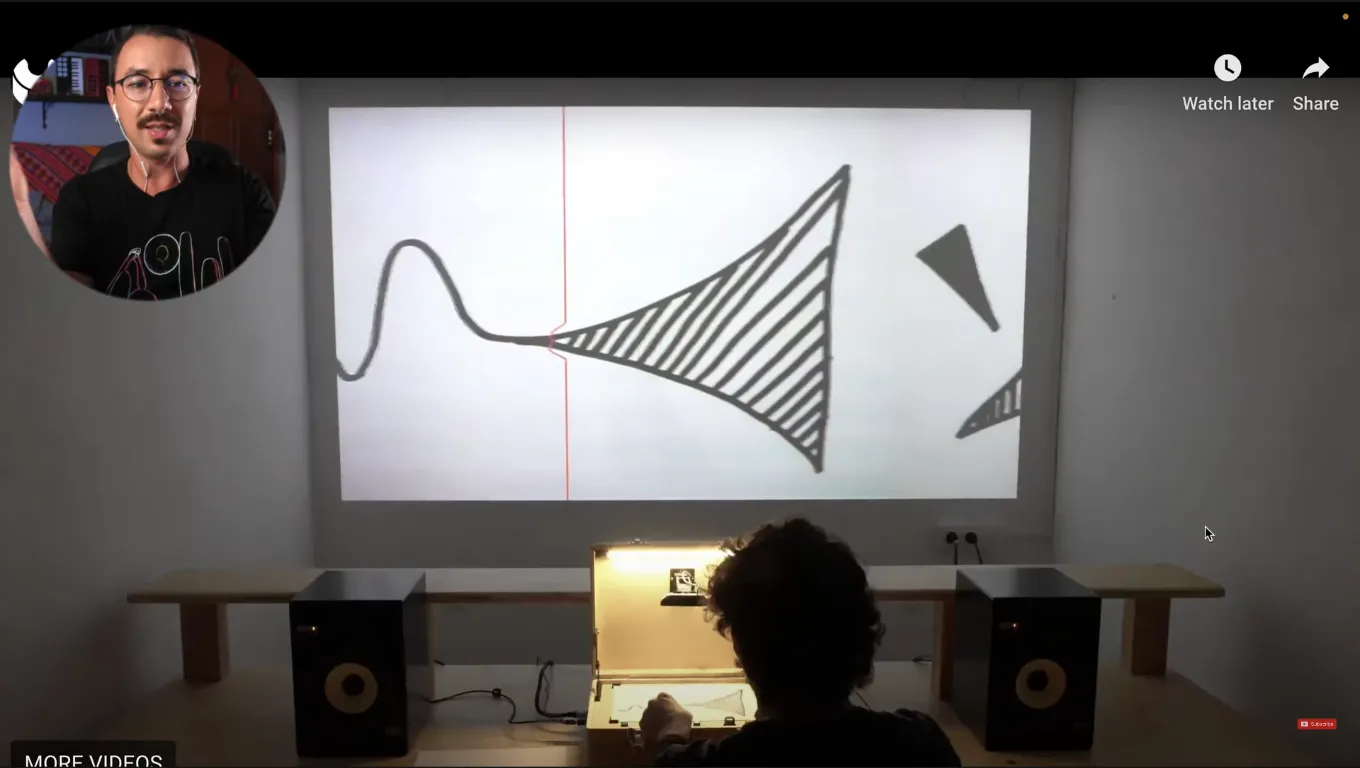
Drawing and collage form the visual input for the Sonògraf.
YUAN, created by Chi Wang, is a data-driven instrument controller. The official finalist page describes capacitive touch, changes in brightness, and motion detection as inputs for manipulating sound. Across these designs, the input might be a hand, a body, a voice, a drawing, or a magnetic field; each one offers a different relationship between physical action and musical result.
A useful way to look at new instruments
Instead of asking whether one of these instruments replaces a familiar keyboard or guitar, ask what action it makes possible. A wheel can create repeated string patterns; a camera can turn drawings into sound; a movement-based interface can connect a performer’s body to digital music. Those are distinct design choices, not universal improvements over conventional instruments.
These profiles describe the competition finalists presented in 2024. To explore the official project descriptions, see the Guthman 2024 finalists.